
How to Plan an International Trip with Special Needs: The 2026 Buying Guide

How to Plan an International Trip with Special Needs: The 2026 Buying Guide
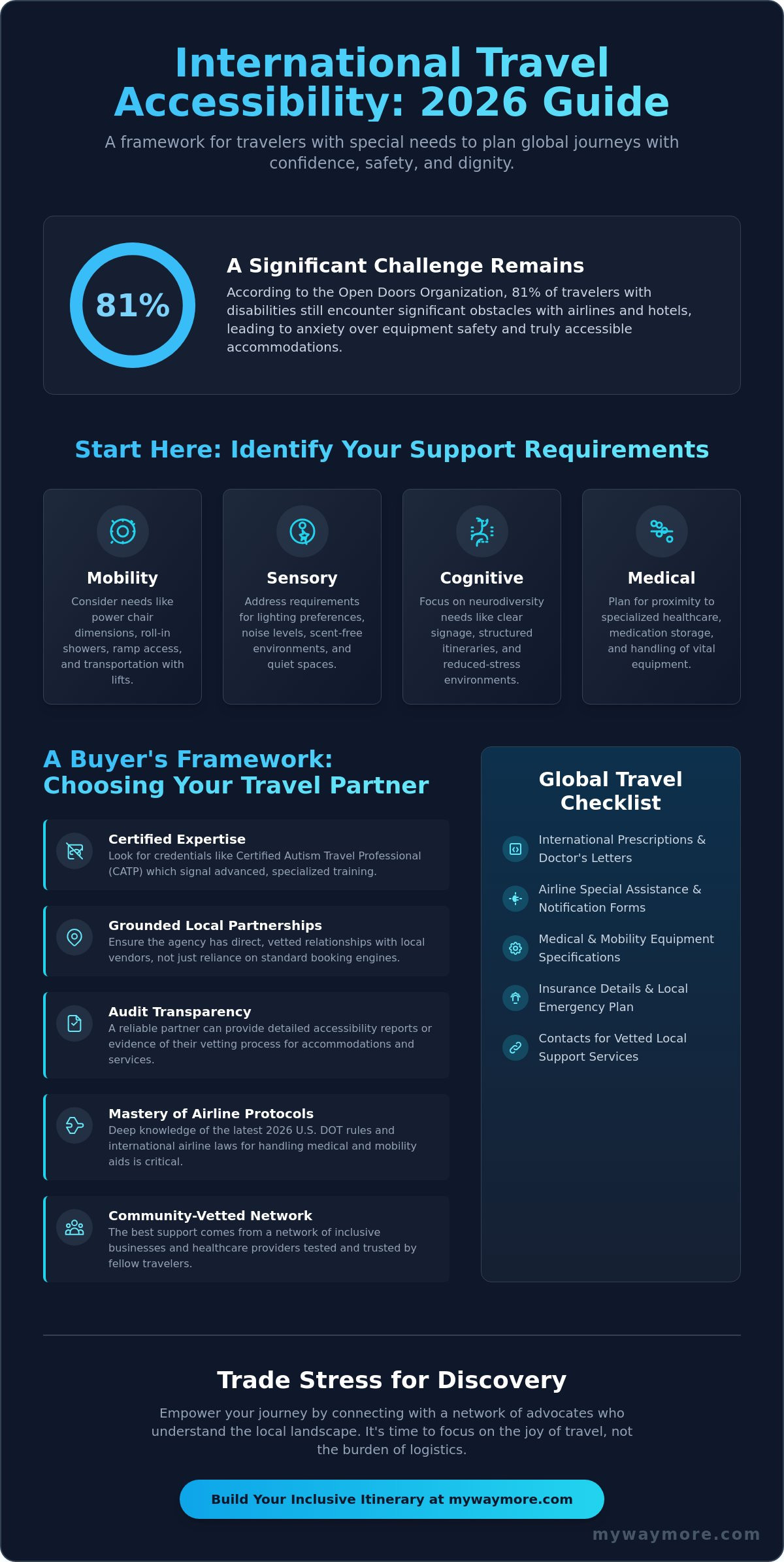
Did you know that 81% of travelers with disabilities still encounter significant obstacles with airlines and hotels, according to recent data from the Open Doors Organization? You’ve likely felt that sharp sting of anxiety when wondering if your medical equipment will survive the cargo hold or if your “accessible” suite actually includes a roll-in shower. Learning how to plan an international trip with special needs shouldn’t feel like an uphill battle against a system that wasn’t built for you. We understand that travel is about freedom, and you deserve a roadmap that prioritizes your safety, identity, and dignity.
This 2026 guide empowers you to master the complexities of global accessibility by using a proven framework for choosing the right travel agencies and vetted local services. We’ll dive into the latest U.S. Department of Transportation rules, like the June 2026 mandate for annual airline staff training, and show you how to evaluate providers using community-backed criteria. You’re about to gain the confidence to build an international itinerary that actually works; one that is supported by a network of travelers and local advocates who have been exactly where you are.
Key Takeaways
- Learn to evaluate international travel agencies based on specialized certifications and their direct partnerships with local providers in your destination country.
- Discover how to plan an international trip with special needs using a hybrid model that pairs your own flight arrangements with expert directory assistance for vetted local services.
- Navigate the latest 2026 airline protocols and legal requirements to ensure your medical equipment and mobility aids are handled with the highest standards of dignity and care.
- Identify the critical documentation needed for global travel, from international prescriptions to specific airline notification forms required by updated accessibility laws.
- Access a community-vetted network of inclusive businesses and healthcare providers to build a reliable itinerary that focuses on discovery rather than logistics.
Navigating the Complexity of International Special Needs Travel in 2026
The year 2026 marks a turning point for global movement. Special needs travel now encompasses a beautiful spectrum of human experience, from physical mobility and chronic health conditions to neurodiversity and sensory processing requirements. Understanding how to plan an international trip with special needs requires looking beyond basic ramps. It’s about finding environments where every traveler feels seen and supported. By April 24, 2026, new digital accessibility standards for public entities in the U.S. have joined the European Accessibility Act to create a more transparent digital world. Yet, the gap between a “compliant” website and a truly “inclusive” physical experience remains wide.
To help you visualize these essential preparation steps, watch this helpful video:
Planning these journeys involves more than just booking a flight. It requires a higher tier of vetting because international borders introduce different legal protections and cultural norms. For a foundational look at these global shifts, you can explore this Accessible Tourism Overview. Investing in professional travel booking assistance or a specialized directory isn’t a luxury; it’s a strategic move to ensure your safety in unfamiliar territory. You aren’t just buying a ticket. You’re securing a network of advocates who understand the local landscape.
Identifying Your Specific Support Requirements
Every successful journey starts with a deep dive into your unique profile. We categorize these into four pillars: Mobility, Sensory, Cognitive, and Medical. A “one-size-fits-all” approach often fails international travelers because a hotel that’s great for a wheelchair user might be a sensory nightmare for someone with autism. Perform a thorough needs assessment before you reach out to any agency. Detail everything from the specific width of a power chair to lighting preferences or proximity to specialized healthcare. This clarity helps your travel partner match you with vetted local businesses that actually meet your standards.
The Emotional and Financial Stakes of Global Travel
The stakes are high when you leave your home country. A planning failure abroad doesn’t just mean a bad night’s sleep; it could mean losing access to vital medical equipment or being stranded in an inaccessible city. This “cost of failure” creates a heavy anxiety tax for caregivers and travelers alike. When you know how to plan an international trip with special needs through professional frameworks, you trade that stress for peace of mind. Travel is a powerful tool for personal empowerment and community connection. It should be a source of joy and discovery, not a test of your endurance.
Choosing the Right International Travel Agency: A Buyer’s Framework
Selecting a partner to manage your journey requires more than a quick search. You need a commercial framework to distinguish between generic agencies and true specialists. When you research how to plan an international trip with special needs, look for these five non-negotiable pillars of service:
- Certified Expertise: Ensure the team holds credentials like the Certified Autism Travel Professional (CATP) designation. This signals a commitment to understanding neurodiverse requirements beyond basic logistics.
- Grounded Local Partnerships: A great agency doesn’t just use standard booking engines; they have direct relationships with local vendors who understand the specific topography and culture of the destination. These connections are vital for finding specialized salons or healthcare abroad.
- Audit Transparency: They should be able to show you exactly how they verify a hotel’s accessibility. Request examples of their previous site reports.
- Contingency Planning: Ask for their protocol if a power wheelchair breaks or a battery fails in a foreign city. With new U.S. DOT rules requiring 24-hour wheelchair return for domestic delays as of 2026, you want an agency that applies that same urgency to international equipment failures.
- Verified Social Proof: Look for reviews from families with similar needs. Community-vetted data is often more reliable than a marketing brochure.
Using an Accessible Travel Guide can help you draft your initial questions, but the agency must provide the boots-on-the-ground reality. You are looking for a navigator, not just a booker.
Vetting for Sensory and Neurodiverse Expertise
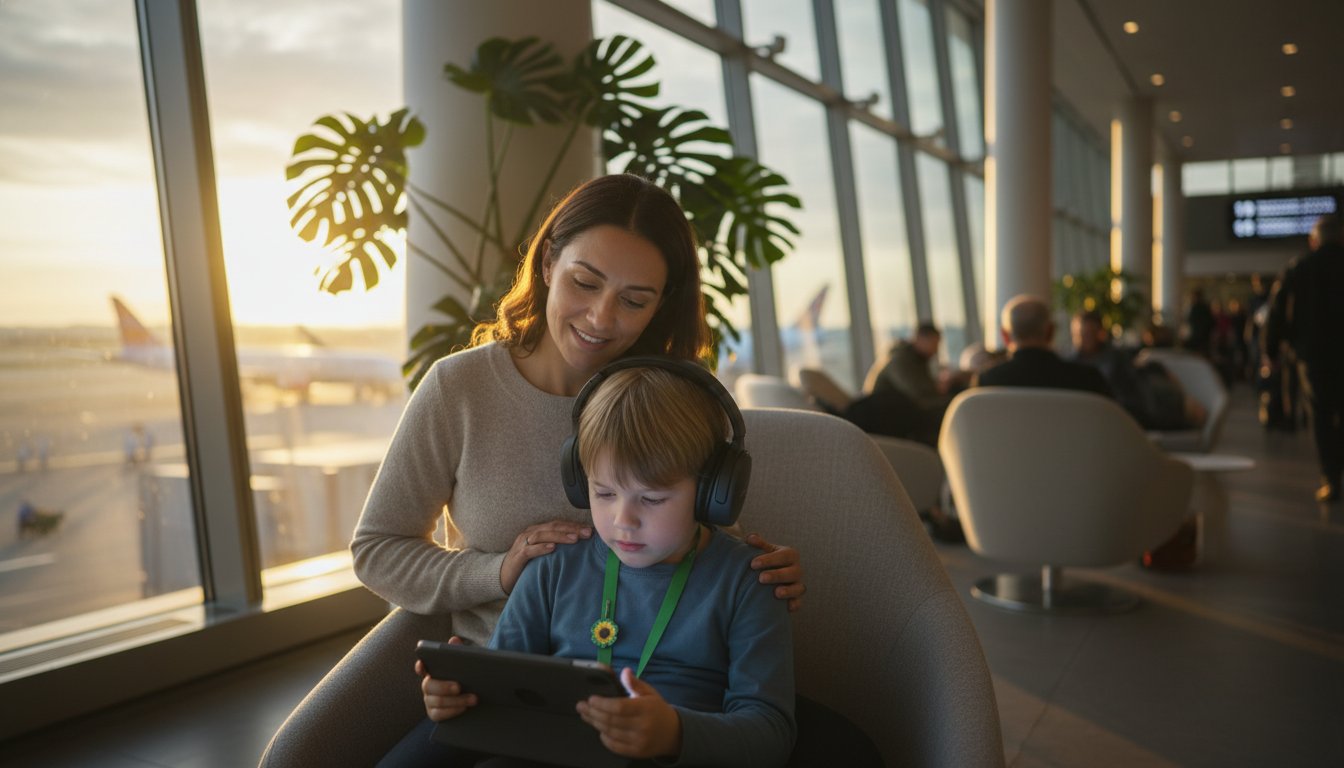
Traveling the spectrum requires a high level of detail. Ask potential agencies about their specific experience with sensory-friendly airport transitions. Do they identify “quiet spaces” in busy terminals? A reliable provider will use a specialized directory to find businesses that offer low-sensory hours or specialized staff training. This ensures you aren’t just getting a hotel room, but a supportive environment. You should also ask if they are familiar with the Hidden Disabilities Sunflower Lanyard, which is increasingly recognized at international airports to signal a need for extra support.
Evaluating Physical Accessibility Standards
Don’t assume “accessible” means the same thing everywhere. While the U.S. follows ADA guidelines, international norms vary wildly. A professional agency should verify that their recommendations meet your specific mobility requirements through site visits or trusted local advocates. An accessibility audit is a mandatory professional service that involves a physical inspection of entryways, bathroom dimensions, and lift reliability. This level of vetting removes the guesswork. Understanding how to plan an international trip with special needs means demanding this level of transparency before you sign a contract. You deserve to know that your shower is truly roll-in before you cross an ocean.
DIY Planning vs. Professional Agencies: Finding Your Support Model
Deciding between doing it yourself and hiring an expert is a pivotal step in learning how to plan an international trip with special needs. DIY planning offers complete control over your budget and pace. It feels empowering to hold the reins. However, it often lacks the safety net required when things go sideways in a foreign country. Professional tour operators provide a layer of legal protection and specialized knowledge that standard booking sites simply can’t match. They understand the difference between a property that is technically compliant and one that is truly functional for your family.
Many travelers now opt for a “Hybrid Model.” This approach involves booking your own flights while using a professional service directory to find vetted local services. This gives you the flexibility of DIY travel but grounds your itinerary in community-verified data. Evaluating the ROI here is simple. If a professional booking assistant saves you from one inaccessible hotel room or a failed medical equipment transfer, the service has already paid for itself. You are spending money to save time, health, and sanity.
The Risks of Generic Booking Platforms
Major booking engines often use broad “accessible” filters that don’t account for international nuances. A hotel in a historic European city might claim to be accessible because it has an elevator; however, that elevator might not fit a modern power chair or a double stroller. Communicating these specific needs can get lost in translation without a local advocate. You can use the verified listings at MyWaymore Services Corp to cross-reference these generic claims with real experiences from families who have already visited those locations. This double-check process prevents the heartbreak of arriving at a destination that can’t accommodate your basic needs.
How to List Your Travel Business for Maximum Trust
For business owners, trust is the primary currency in this niche. Businesses that self-identify as inclusive in specialized directories are often more reliable than those on mass-market sites. When you’re searching, look for detailed directory profiles that include high-resolution photos of bathrooms, entryways, and sensory-friendly zones. These visual receipts, combined with peer reviews, provide the validation you need to book with confidence. Seeing a photo of the actual roll-in shower is worth more than a thousand “accessible” checkboxes. It turns a risky transaction into a meaningful interaction with a business that values your presence through MyWaymore Services Corp.
The Global Accessibility Checklist: Logistics, Laws, and Local Support
Transitioning from a solid plan to a successful journey requires a deep dive into current regulations. Understanding how to plan an international trip with special needs in 2026 means staying ahead of rapidly changing airline standards. As of June 17, 2026, all U.S. airline employees and contractors must undergo annual training for physical assistance and wheelchair handling. This ensures a safer, more dignified experience for travelers with mobility disabilities. Additionally, if you’re flying later in the year, be aware that new standards for on-board wheelchairs take effect on October 2, 2026, improving stability and maneuverability during your flight.
Follow these five steps to ground your itinerary in reality:
- Step 1: Secure international prescriptions and medical documentation. Carry physical copies in the local language of your destination.
- Step 2: Use airline notification protocols. Notify carriers at least 48 hours in advance regarding ventilators, oxygen, or power mobility devices.
- Step 3: Identify “Double Checked” local healthcare. Locate the nearest specialized clinics and verify their accessibility before you leave.
- Step 4: Know your rights. In Europe, the European Accessibility Act (EAA) and Regulation 1107/2006 mandate assistance at airports and protect against the denial of boarding.
- Step 5: Build a “support nest.” Use a community directory to find local advocates who can assist if a service provider fails to meet your needs.
Assistive Technology and International Power Standards
Power management is a critical safety issue. Voltage converters are essential for power wheelchairs and CPAP machines when traveling between continents. Check the 2026 battery regulations for international flights, as lithium-ion watt-hour limits are strictly enforced. Always carry a basic repair kit with spare fuses and tools specific to your device. Knowing the local service providers in your destination city can save your trip if a motor fails or a tire goes flat. Don’t wait for an emergency to find a technician.
Finding Vetted Local Services Abroad
Longer trips often require services beyond basic lodging. You might need an accessible hair salon that understands sensory sensitivities or a physical therapist who can provide a mid-trip adjustment. Using a special needs travel directory allows you to find these niche businesses that have been vetted by the community. Verification is key. A business listing that includes photos and recent peer reviews offers a level of security that generic search engines can’t provide. You deserve a trip where every detail is curated for your comfort. Find your next vetted service provider today.
Building Your Inclusive Itinerary with the MyWaymore Services Corp Vetted Community
The final stage of learning how to plan an international trip with special needs is where your research transforms into a lived experience. It’s the moment you move beyond survival logistics and start focusing on the joy of discovery. MyWaymore Services Corp bridges the gap between high-level global planning and the “boots-on-the-ground” reality of local inclusive businesses. While a professional agency handles the broad strokes of your journey, our community directory helps you find the overlooked and exceptional spots that make a trip truly memorable. This includes finding that quiet, sensory-friendly bistro in Paris or an accessible artisan workshop in Tokyo that generic travel guides often miss. To ensure those hidden gems are led by someone who truly knows the destination, learning how to find local tour guides who are vetted and values-aligned is an essential part of building your inclusive itinerary.
For neurodiverse families, community reviews are the ultimate currency. Knowing that another family with similar requirements has successfully navigated a specific venue provides a level of confidence that marketing brochures can’t replicate. The 81% of travelers with disabilities who now use the internet for trip planning deserve a platform that prioritizes these lived experiences. By integrating professional advice with directory-vetted local discoveries from MyWaymore Services Corp, you create a layered support system that protects your peace of mind while encouraging true exploration.
Why Community-Centric Directories Beat Search Engines
Standard search engines prioritize ad spend over actual human needs. In contrast, an identity-focused search allows you to find businesses owned by or dedicated to supporting underrepresented entrepreneurs and the disability community. This transforms a simple business transaction into a meaningful interaction. When you choose a vetted provider through MyWaymore Services Corp, you’re making a collective social contribution to the local economy of your destination. We encourage you to contribute to this cycle by reviewing your international service providers. Your feedback on a specialized salon or a local healthcare clinic helps the next traveler navigate the world with a little more ease and a lot more joy.
Next Steps: Booking with Confidence
Before you click “book” on that dream itinerary, run through your final checklist. Verify that your medical documentation is translated, confirm your airline notification protocols are on file, and ensure your support nest of local contacts is saved in your phone. If the complexity of your itinerary feels overwhelming, you can access professional travel booking assistance through MyWaymore Services Corp. This service pairs our community data with expert planning to ensure every detail of your journey is secure. Every trip you take is a step toward a more inclusive world. How to plan an international trip with special needs is a skill you’ve now mastered; now, it’s time to share your journey and empower the next explorer in our community.
Your Journey to a More Accessible World Starts Here
You now possess the tools to turn global exploration from a source of anxiety into a series of curated discoveries. By moving beyond generic booking filters and embracing a hybrid model of professional expertise and local advocacy, you’ve claimed your right to the world. Mastering how to plan an international trip with special needs is about more than just finding a ramp; it’s about connecting with a global ecosystem that values your presence and understands your requirements. You’re no longer just a traveler; you’re a socially conscious navigator supporting a more inclusive economy.
The next step is to put this framework into action. Discover vetted inclusive businesses for your next trip on MyWaymore Services Corp and explore our global directory of accessible professional services. With community-vetted reviews and a focus on empowering underrepresented entrepreneurs, we’re here to ensure your itinerary is as exceptional as your destination. Pack your bags with confidence, knowing that a whole community has your back. The world is waiting for you to arrive.
Frequently Asked Questions
How do I find an international travel agency that specializes in autism?
Search for agencies that employ staff with the Certified Autism Travel Professional (CATP) designation. These experts have specific training in sensory processing and communication needs. You can find these specialists through a professional service directory listing that focuses on inclusive travel. It’s also helpful to look for providers who offer “social stories” or visual guides for the specific destinations you plan to visit.
What are my rights if an airline damages my wheelchair on an international flight?
Your rights depend on the airline and the jurisdictions involved in your flight path. For U.S. carriers, the Air Carrier Access Act protects you; however, international flights are often governed by the Montreal Convention. In Europe, Regulation 1107/2006 mandates assistance and compensation. Always file a “Property Irregularity Report” before leaving the airport to document the damage and start the claim process for repairs or replacement.
Can I use my disability parking permit in another country?
Reciprocity for parking permits is not universal and varies by country. Many EU nations recognize the U.S. blue placard, but you should verify this with the local embassy before you arrive. Some travelers find success by displaying a translated explanation of their permit. To stay safe, check local ordinances to see if you need to apply for a temporary local permit to avoid parking fines.
How do I verify if a hotel is truly wheelchair accessible in Europe?
Request specific doorway widths and photos of the bathroom before booking to ensure the room meets your needs. Historic European buildings often have small elevators or single steps that “accessible” filters on major sites might ignore. Using a directory that features community-vetted reviews can help you confirm if a property is truly functional. Learning how to plan an international trip with special needs involves this extra layer of direct verification.
Are there specific travel insurance policies for travelers with pre-existing special needs?
You can find specialized policies that offer a “pre-existing condition waiver” if you purchase the plan within a specific window after your first trip payment. Ensure your policy covers the high cost of medical equipment repair and emergency medical evacuation. When you’re figuring out how to plan an international trip with special needs, it’s vital to read the fine print regarding “reasonable and customary” medical expenses in your destination country.
How can I find a sensory-friendly tour guide in a foreign city?
The best way to find these guides is through a community-centric directory that highlights inclusive business owners. Look for guides who specialize in private, customizable tours where you can control the pace and environment. These providers often have experience working with neurodiverse families and can identify quiet zones or low-sensory routes. Peer reviews are an excellent tool for validating that a guide actually understands sensory processing requirements. For a deeper look at sourcing the right person for your destination, explore this comprehensive resource on how to find local tour guides who are vetted, inclusive, and values-aligned.
What documents do I need to travel internationally with a service animal?
You will need an international health certificate, a valid rabies vaccination record, and any specific import permits required by your destination. Some countries require a FAVN blood test or have strict quarantine periods that must be managed months in advance. Always check the specific airline’s service animal policy and the destination’s “Service Animal” definition, as these can differ significantly from U.S. standards under the ADA.
Disclaimer
The information provided on MyWaymore Services is for general informational and educational purposes only. While we strive to provide accurate and up-to-date travel and business information, all content is provided in good faith and we make no representation or warranty of any kind, express or implied, regarding the accuracy, adequacy, validity, or completeness of any information on the site.This article may contain affiliate links. If you click on a link and make a purchase or booking, MyWaymore Services may receive a small commission at no additional cost to you. This helps us continue to provide high-quality travel guides and directory services. We only recommend products, hotels (such as RIU or Sandals), and services that we believe add value to our readers.Your use of the site and your reliance on any information provided is solely at your own risk. Always consult with a professional for specific travel, legal, or financial advice.

Recent Comments