The Ultimate Guide to Using a Special Needs Travel Directory in 2026

The Ultimate Guide to Using a Special Needs Travel Directory in 2026
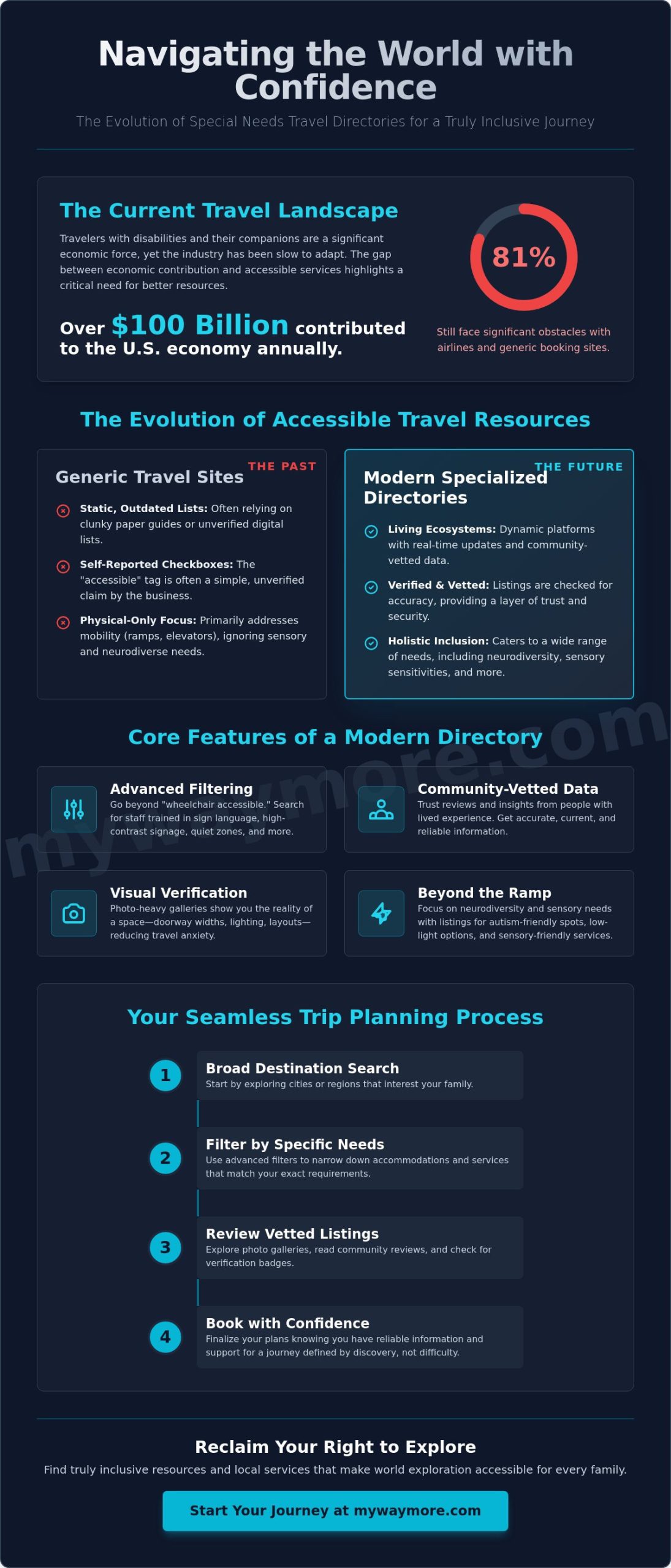
Did you know that U.S. travelers with disabilities and their companions contribute over $100 billion to the economy annually, yet 81% still face significant obstacles with airlines? It’s a frustrating reality that often makes planning a trip feel more like a hurdle course than a vacation. You’ve likely spent hours scrolling through generic sites only to arrive at a “certified” hotel that doesn’t actually fit your wheelchair. That’s why a specialized special needs travel directory is no longer just a luxury. It’s an essential tool for reclaiming your right to explore with confidence and local support.
We understand that finding a sensory-friendly salon or a vetted professional service while away from home shouldn’t be a guessing game. You deserve the peace of mind that comes from community-vetted data and authentic recommendations from people who actually understand your specific requirements. This guide will show you how to find truly inclusive resources and local services that make world exploration accessible for every family. We’ll look at the latest 2026 travel regulations, the power of accessibility influencers, and how to use professional listings to ensure your next journey is defined by discovery rather than difficulty.
Key Takeaways
- Understand how a modern special needs travel directory has evolved into a centralized hub that prioritizes holistic inclusion for every part of your journey.
- Learn to use advanced filtering capabilities to find accommodations and local professional services tailored to your family’s specific accessibility requirements.
- Discover the power of community-vetted reviews and lived experience to ensure your travel information is accurate, current, and reliable.
- Master a step-by-step planning process that starts with broad destination searches and narrows down to essential local services near your stay.
- See how supporting inclusive and underrepresented businesses through curated platforms creates a more accessible travel environment for everyone.
What is a Special Needs Travel Directory in 2026?
A special needs travel directory in 2026 is far more than a static list of hotels with ramps. It’s a living, breathing ecosystem designed to connect families with vetted resources that understand the nuance of modern travel. The industry has moved past the era of “handicap accessible” labels, which often only addressed physical mobility. Instead, we’ve entered the age of Accessible Tourism that prioritizes holistic inclusion. This means looking at the entire journey, from sensory-friendly airport lounges to local healthcare providers who can assist you at your destination. It’s about finding a centralized hub where every flight, hotel, and local business has been verified for its commitment to real accessibility.
To better understand how these resources are evolving and the support available at the highest levels of government, watch this helpful video:
Trust is the foundation of any successful trip. When you see an “accessible” tag on a generic travel site, it’s often a self-reported checkbox that doesn’t account for the reality of your daily life. A community-driven special needs travel directory solves this by using vetted data. This isn’t just about logistics; it’s about empowerment. It gives you the tools to explore new cities while knowing that the services you rely on, like specialized personal care or mobility assistance, are actually available and ready for your arrival.
The Evolution of Accessible Travel Resources
Digital directories have completely replaced the clunky, outdated paper guides of the past. In 2026, the real magic happens through personalized matching. Advanced platforms now use sophisticated logic to pair your specific requirements with businesses that can actually meet them. It’s no longer enough to know a hotel has a lift; you need real-time updates on whether that lift is operational today. This level of verification builds the security you need to book with confidence. It turns a simple search into a reliable plan for your family’s growth and exploration.
Beyond the Ramp: Including Neurodiversity and Sensory Needs
Accessibility isn’t just about physical barriers. For many families, the biggest challenges are sensory overload and neurodiverse requirements. A modern special needs travel directory must categorize listings by specific needs, such as autism-friendly environments or low-light options. There’s a massive, growing demand for “quiet spaces” in bustling tourist hubs. We focus on these often-overlooked details because true inclusion means every family member feels safe and comfortable. Whether it’s finding a salon that offers sensory-friendly appointments or a restaurant with a dedicated quiet zone, these details transform a stressful trip into a curated discovery. You aren’t just looking for a room; you’re looking for a community that welcomes you exactly as you are. For families seeking a destination that has set the global standard for this kind of neurodiverse-first design, our Sesame Place sensory-friendly planning guide for 2026 offers a detailed roadmap for a stress-free visit.
Key Features of a Modern Accessibility Resource
Planning a trip shouldn’t feel like a second job. For many families, the fear of the unknown is the biggest barrier to booking. A robust special needs travel directory in 2026 addresses this by offering advanced filtering that goes beyond basic accessibility. You can now filter for specific conditions, such as high-contrast signage for visual impairments or businesses with staff trained in sign language. This precision allows you to match your unique needs with verified locations, reducing the chance of arriving at a destination that doesn’t work for you. It’s about turning a broad search into a tailored experience that respects your time and energy.
Trust is built through transparency and verification. Listings should feature photo-heavy galleries that show, rather than just tell, what a space looks like. Seeing the actual width of a doorway or the lighting in a dining room can significantly lower travel-related anxiety. Additionally, look for verification badges. These markers signify that a business has met specific inclusion standards, providing an extra layer of security. Knowing your rights is also part of the preparation process. The U.S. Department of Transportation has established the Airline Passengers with Disabilities Bill of Rights to ensure you are treated with dignity and receive necessary assistance. Using a specialized special needs travel directory alongside these legal protections creates a safety net for every traveler.
Inclusive Local Business Listings
A successful trip requires more than just a place to sleep. You need to know where to find a sensory-friendly barber or a local therapy center. This is where a professional service directory listing becomes invaluable. By highlighting inclusive and minority-owned businesses, these directories empower the local economy while providing essential care. MyWaymore offers a supportive platform to help you discover these local gems and plan with confidence.
Verified Reviews from the Special Needs Community
Generic reviews often miss the details that matter most. High-quality feedback in a specialized directory focuses on specific triggers, staff patience, and functional features. Community-led verification means the data is lived and tested. When you read a review from another traveler who shares your challenges, you gain the confidence to explore. This collective social contribution turns a simple search into a meaningful way to support one another globally.
Why Community-Vetted Data Beats Static Lists
Static lists are the ghosts of travel planning. They offer names and addresses but lack the pulse of real-time reality. When you use a special needs travel directory, you’re tapping into a living community that answers the most pressing question: “How do I know this information is current?” Community-vetted data is self-correcting. If a hotel’s accessible lift breaks or a restaurant changes its lighting, the community reports it. This transparency shifts the burden of verification from your shoulders to a collective network of travelers who have already walked the path. You gain the security of knowing that your plans are based on today’s conditions, not a five-year-old brochure.
Social proof does more than just provide facts. It reduces the heavy emotional burden of trip planning. Instead of crossing your fingers and hoping for the best, you rely on the lived experience of others. This shared knowledge acts as a safety net. You aren’t just reading a marketing blurb; you’re hearing from a parent who managed a sensory transition in that specific lobby or a traveler who successfully navigated that exact shuttle service. It turns a risky transaction into a confident discovery. Every review becomes a guidepost for the next family, making the world feel a little smaller and much more welcoming.
The Problem with Outdated Compliance Standards
Legal standards are essential, but they are often the bare minimum. A “certified” badge in 2026 might tell you a door is wide enough, but it won’t tell you if the staff is impatient or if the hallway echoes are overwhelming. There’s a significant gap between meeting a legal checklist and providing actual family comfort. True inclusion is a feeling, not just a floor plan. Community data fills this gap by focusing on the human element of service and environment that static compliance lists simply ignore. This ensures your special needs travel directory search leads to places that actually value your presence.
Empowering Families Through Shared Knowledge
There is a profound emotional benefit in knowing that “someone like me” has stayed at a property and thrived. It builds a global network of supportive travelers who look out for one another. This is where MyWaymore shines as a community-first platform. By connecting travelers with local advocates and inclusive business owners, it transforms the search process into a social contribution. You aren’t just booking a service; you’re participating in a movement that highlights the exceptional and the overlooked. This connection fosters the confidence needed to explore further and more often, knowing you have a community of advocates standing with you.
How to Use a Travel Directory to Plan a Seamless Trip
Start your journey by casting a wide net. A modern special needs travel directory allows you to search by destination while simultaneously selecting your primary accessibility requirements. This initial search should be broad to see the full scope of what a city offers. Once you have a list of potential hubs, you can begin the process of layering your search with specific filters. Don’t just look for a hotel; look for the ecosystem around it. A seamless trip is built on the details you find between the major landmarks, such as a sensory-friendly cafe or a park with inclusive play equipment. Theme parks like Sesame Place, which offers inclusive adventures designed around sensory-friendly principles, are excellent examples of destinations worth anchoring your itinerary around.
Vetting a location requires more than just looking at a star rating. You should cross-reference directory reviews with official business claims to ensure everything aligns with your expectations. If a hotel claims to be accessible but the community notes a heavy carpet that makes wheelchair movement difficult, you’ve saved yourself a major headache. For specific questions that aren’t answered in the listing, utilize the community forums. This is where you can ask about current conditions, such as whether local airline staff have met the June 17, 2026, deadline for disability assistance training. Using these tools turns a stressful planning phase into an empowering discovery process. Families who find the planning process overwhelming can also benefit from dedicated travel booking assistance for stress-free trip planning that combines professional expertise with community-driven insights.
Step 1: Identifying Your Essential Needs
Create a “must-have” checklist before you even open your browser. This list should differentiate between basic “accessible” features, like a ramp, and “inclusive” features, like staff who understand neurodiverse needs. Use your directory filters to narrow down thousands of options to the few that truly fit your family’s lifestyle. It’s much easier to choose from five perfect matches than to scroll through fifty “maybe” options. Focus on your non-negotiables first, then look for the “nice-to-have” amenities that add joy to your stay.
Step 2: Vetting the Destination via Community Insights
Read between the lines of professional service reviews. A review that mentions a “quiet atmosphere” might be the perfect signal for a family seeking a low-sensory environment. Use the directory messaging tools to contact businesses directly. This direct line of communication allows you to verify the “vibe” of a venue, not just the technical specs. You want to know if the environment feels welcoming and supportive, which is something a floor plan can’t tell you. If you need expert help putting these pieces together, you can access travel booking assistance to ensure every detail is covered by a professional who understands your needs.
Finalize your plans by booking through verified listings. This ensures you’re supporting businesses that have invested in inclusion and are part of a trusted network. Every search you conduct is a collective social contribution that helps the entire community find better, safer, and more inclusive ways to see the world.
MyWaymore: Your Global Hub for Inclusive Travel
MyWaymore stands as a community-first platform where discovery meets reliability. We aren’t just another search engine; we are a dedicated special needs travel directory built to empower both the traveler and the inclusive business owner. Our mission centers on highlighting diverse business ownership and underrepresented entrepreneurs who prioritize accessibility. By focusing on these curated discoveries, we help you find the exceptional services that generic sites often overlook. Whether you need a local guide who understands mobility challenges or a business owner who has invested in neurodiverse training, our platform connects you with the heart of the local community. Every search you perform on MyWaymore is a collective social contribution that elevates a simple transaction into a meaningful interaction.
We understand that travel is about more than just a destination. It’s about the security of knowing your needs will be met with dignity and respect. U.S. travelers with disabilities spend nearly $50 billion annually on travel, and we believe that investment should go toward businesses that truly value inclusion. MyWaymore acts as a supportive partner, offering a space where verification and ease of use build a sense of safety for every family. Our platform is designed to make specialized services feel more accessible through vetted recommendations, giving you the peace of mind to focus on personal growth and shared experiences.
Discovering More than Just a Hotel
Your journey requires a full ecosystem of support, which is why MyWaymore goes beyond basic lodging. Use our special needs travel directory to find inclusive restaurants, dentists, and home services worldwide. We place a specific thematic emphasis on personal care, helping you locate sensory-friendly salons and aesthetic services that understand your unique requirements. This holistic approach ensures that your daily routines remain manageable even when you’re far from home. Additionally, our community blog provides deep-dive resources for sensory planning, offering the practical advice you need for domestic maintenance and international exploration alike.
Join the Movement for Inclusive Exploration
The world is yours to explore, and we are here to guide you every step of the way. When you create a MyWaymore profile, you join a global network of advocates dedicated to making the world more accessible. You can contribute your own reviews to help other families avoid obstacles and find hidden gems. For business owners, our basic and premium business listings provide a way to reach a community that values intentional consumerism and diversity. Start your journey today by joining our community to discover curated, exceptional travel. Let’s work together to make every trip a story of confidence and empowerment.
Embrace the Future of Inclusive Exploration
The landscape of travel in 2026 has shifted toward deep inclusion and personal empowerment. You now have the tools to move past the uncertainty of generic travel sites and embrace a world that’s ready for your family. By utilizing a specialized special needs travel directory, you gain access to a global community of vetted inclusive businesses that prioritize your comfort and safety. From finding neurodiverse-friendly restaurants to securing local professional services you can trust, your planning process is now a collective social contribution.
Trusted by travelers and business owners since 2021, MyWaymore remains your dedicated partner in uncovering the exceptional and the overlooked. We empower families with neurodiverse and sensory-friendly resources that turn potential stress into curated discovery. Don’t let the fear of the unknown hold you back from the personal growth and shared experiences that travel provides. You deserve a journey that feels both aspirational and grounded in the practical needs of your daily life. Start planning your next inclusive adventure with MyWaymore today! The world is waiting for you to explore it with confidence.
Frequently Asked Questions
What is the best special needs travel directory for neurodiverse families?
MyWaymore is a premier choice for neurodiverse families because it prioritizes holistic inclusion over simple physical accessibility. It highlights businesses that offer sensory-friendly environments, quiet zones, and low-light options. This focus on neurodiversity ensures that your family can find spaces that understand your specific needs, making every trip feel more supportive and less overwhelming.
How do I know if a travel directory has updated accessibility information?
You should look for platforms that prioritize community-vetted data and recent reviews from other travelers. A reliable special needs travel directory relies on the lived experiences of its users to report real-time changes, such as the operational status of equipment or recent staff training. This collective social contribution keeps the information current and builds a sense of security for your planning.
Can I find local professional services like sensory-friendly salons in a travel directory?
Yes, modern directories now include a wide range of local professional services beyond just hotels and flights. You can find sensory-friendly salons, inclusive dentists, and local therapy centers to help maintain your family’s routine while away from home. These listings empower the local economy and ensure that specialized care is always within reach during your travels.
What is the difference between an accessible hotel and an inclusive hotel?
An accessible hotel typically meets the minimum legal requirements, such as ramp access and specific door widths. An inclusive hotel goes further by focusing on the “vibe” and staff training to ensure every guest feels genuinely welcome. Inclusion is about the human element of service, while accessibility is often just about the floor plan and physical specs.
Are special needs travel directories free to use for families?
Most directories are free for families and travelers to browse, search, and use for trip planning. These platforms typically generate revenue through business listing options and professional services for entrepreneurs. This model allows you to access curated discoveries and verified recommendations without worrying about a subscription fee for your family.
How can a directory help me find medical equipment rentals while traveling?
A directory acts as a socially conscious navigator by connecting you with local vendors who specialize in mobility aids and sensory equipment. While the directory doesn’t sell the physical gear, it provides a trusted list of providers at your destination. This helps you skip the generic search and move straight to vetted professionals who understand your requirements.
Why should I trust community reviews over official business descriptions?
Community reviews offer the authentic storytelling and lived experience that marketing descriptions often lack. Other travelers will mention specific sensory triggers or the patience level of the staff, which are critical details for special needs planning. This peer-to-peer verification creates a safety net that helps you avoid inaccessible “certified” locations and find truly exceptional discoveries.
How do I list my inclusive business on a special needs travel directory?
You can choose from several options to highlight your commitment to accessibility, such as a Basic Business Listing or a Premium Business Listing. For those who want maximum visibility, a Featured Business Placement puts your services in front of a dedicated community of intentional consumers. These professional service directory listings help you grow your business while supporting the local special needs community.
Disclaimer
The information provided on MyWaymore Services is for general informational and educational purposes only. While we strive to provide accurate and up-to-date travel and business information, all content is provided in good faith and we make no representation or warranty of any kind, express or implied, regarding the accuracy, adequacy, validity, or completeness of any information on the site.This article may contain affiliate links. If you click on a link and make a purchase or booking, MyWaymore Services may receive a small commission at no additional cost to you. This helps us continue to provide high-quality travel guides and directory services. We only recommend products, hotels (such as RIU or Sandals), and services that we believe add value to our readers.Your use of the site and your reliance on any information provided is solely at your own risk. Always consult with a professional for specific travel, legal, or financial advice.

Recent Comments