The 10 Best Wheelchair Accessible Beach Destinations in the USA for 2026
The 10 Best Wheelchair Accessible Beach Destinations in the USA for 2026
What if your next coastal getaway wasn’t defined by the obstacles you face, but by the seamless way a community welcomes you? We know the frustration of searching for wheelchair accessible beach destinations usa only to find outdated information or “accessible” ramps that lead straight into a sand trap. You deserve more than just a view from the boardwalk; you deserve to feel the salt air at the water’s edge without the anxiety of wondering if the right equipment will be there when you arrive.
This guide highlights the most inclusive coastal escapes in America where state-of-the-art accessibility meets breathtaking natural beauty. You’ll discover destinations like Virginia Beach, where the 15,000-square-foot Grommet Island Park offers 100% accessibility, and Gulf Shores, where verified “Access Mats” make navigating the shoreline a reality. Whether you need to reserve a free beach wheelchair or you’re looking for a holistic trip with accessible dining, we’re here to help. Our travel booking assistance and professional directory connect you with vetted services, ensuring you can focus on making memories rather than managing logistics. This article covers ten premier escapes where community infrastructure and specialized equipment come together to create the ultimate beach vacation.
Key Takeaways
- Learn why modern coastal design in 2026 goes beyond basic ramps by incorporating permanent non-slip pathways and extended Mobi-Mats for true shoreline access.
- Explore our curated list of the top wheelchair accessible beach destinations usa, featuring inclusive highlights from the boardwalks of Virginia Beach to the iconic Haystack Rock in Oregon.
- Master the pro-traveler’s checklist by learning how to verify “Mat to Tide” distances and which local departments to call 48 hours before your arrival to confirm equipment availability.
- Discover how to build a complete vacation ecosystem using travel booking assistance to find vetted, accessible dining and accommodations that support your specific needs.
Defining Modern Beach Accessibility: What to Expect in 2026
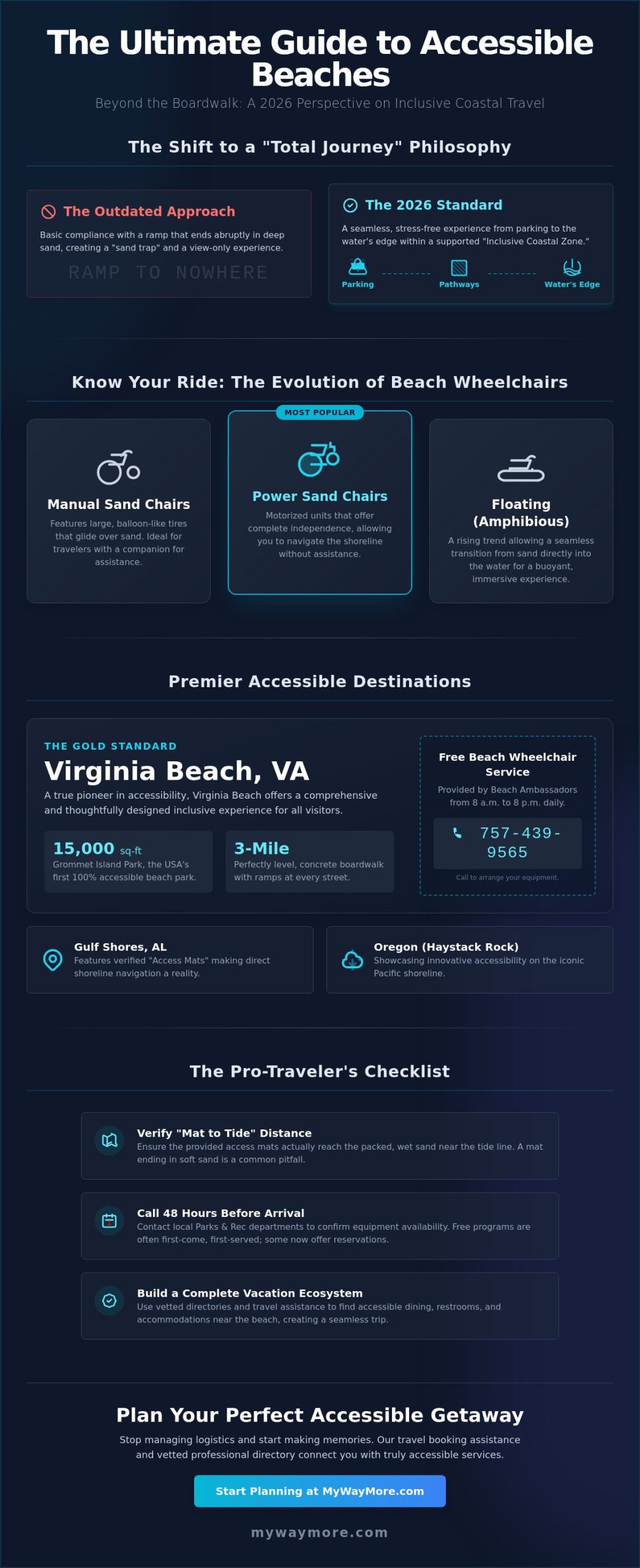
Accessibility isn’t a checkbox anymore; it’s a commitment to community. In 2026, the standard for wheelchair accessible beach destinations usa has shifted from basic compliance to a “total journey” philosophy. This means a ramp leading to the sand is no longer enough. A truly inclusive destination ensures that every step of your trip, from the parking spot to the water’s edge, is supported by functional, well-maintained infrastructure. Defining Modern Beach Accessibility in this new era requires looking at the “Inclusive Coastal Zone,” a designated area where accessible dining, restrooms, and shoreline access converge to create a stress-free environment.
Community-vetted information has become the gold standard for travelers with disabilities. Static government websites often fail to report when a beach mat is buried under storm debris or when a rental program is paused due to staffing. Relying on a professional service directory or local advocate ensures you’re getting real-time updates. When you use our travel booking assistance, you’re tapping into a network that understands the difference between a “handicap-friendly” label and a truly functional space.
Essential Infrastructure: Mats, Ramps, and Beyond
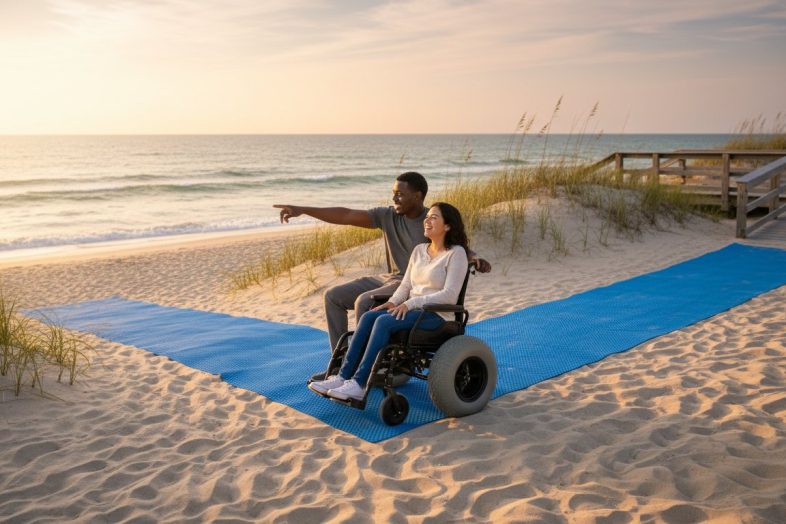
Modern coastal design now distinguishes between seasonal “Mobi-Mats” and permanent non-slip pathways. While temporary mats provide vital access, 2026 standards favor permanent coastal pathways integrated into the landscape. These paths don’t just stop at the dunes. They prioritize “point of entry to water’s edge” connectivity, ensuring you can actually reach the tide line. Look for destinations that maintain high accessible parking ratios. In prime coastal real estate, having a van-accessible spot near the mat entrance is the first win of your vacation.
The Evolution of Beach Wheelchair Programs
The equipment available at wheelchair accessible beach destinations usa has evolved significantly. You’ll generally encounter three types of specialized chairs:
- Manual Sand Wheelchairs: Best for travelers with a companion, these feature large, balloon-like tires that glide over soft sand.
- Power Sand Wheelchairs: These motorized units offer total independence, allowing you to navigate the shoreline without assistance.
- Floating (Amphibious) Chairs: A rising trend in public programs, these chairs allow you to transition from the sand directly into the water for a buoyant experience.
Because many free programs operate on a first-come, first-served basis, we recommend calling local Parks and Recreation departments at least 48 hours before your arrival. Some locations now offer reservation-based systems to guarantee equipment, which is a detail we prioritize in our featured business listings. Knowing exactly what’s available before you pack your bags provides the peace of mind you need to truly relax.
Top East Coast Destinations: From Boardwalks to Barrier Islands
The Atlantic coastline offers some of the most established wheelchair accessible beach destinations usa, blending historic charm with forward-thinking design. These communities understand that true hospitality means everyone gets to enjoy the surf. From the high-energy boardwalks of Virginia to the serene dunes of the Carolinas, the East Coast is leading the way in inclusive travel infrastructure. If you’re feeling overwhelmed by the logistics, our travel booking assistance can help you navigate these coastal gems with confidence.
Virginia Beach: The Gold Standard for Boardwalk Access
Virginia Beach isn’t just a destination; it’s a pioneer. The city is home to Grommet Island Park, a 15,000-square-foot oceanfront space that stands as the first 100% accessible beach park in the country. It features sensory play areas and specialized equipment that ensures no one is left on the sidelines. The iconic three-mile concrete boardwalk is perfectly level, providing a smooth ride for both manual and power chairs. You’ll find ramps at every single street, creating a seamless transition from the city to the sand. For those wanting to get closer to the water, Beach Ambassadors provide free sand wheelchairs from 8 a.m. to 8 p.m. daily. Just call 757-439-9565 to arrange your equipment and head straight for the waves.
Cape Cod: Natural Beauty Without the Barriers
Cape Cod proves that rugged, natural beauty doesn’t have to be off-limits. At Coast Guard Beach, a specialized wheelchair-accessible shuttle system transports visitors from the parking area directly to the shore. In Provincetown, the ‘Boardwalk to the Beach’ initiative has transformed how travelers reach the water by installing sturdy, non-slip pathways. All visitor centers within the Cape Cod National Seashore are fully accessible, offering tactile exhibits and clear navigational signage.
Further south, the Cape Hatteras National Seashore in the Outer Banks provides a model for barrier island accessibility with its boardwalks and off-road wheelchair availability. While Myrtle Beach remains a hub for inclusive family entertainment and adaptive surfing, keep in mind that the city’s free wheelchair program is currently paused as of May 2026. However, the community has stepped up. Dozens of fully accessible beach entrances remain open, and private rental companies are ready to fill the gap with motorized sand chairs. Vehicles with valid placards even park for free at public meters, making it easier to spend your day focusing on the ocean rather than the logistics of the trip.
West Coast and Island Gems: Innovation on the Pacific Shore
While the East Coast is famous for its historic boardwalks, the Pacific shore and tropical islands are redefining wheelchair accessible beach destinations usa through high-tech solutions and rugged gear. Innovation here isn’t just about paving a path; it’s about engineering ways for everyone to experience the unique terrains of the West, from volcanic craters to massive monoliths. These locations prove that even the most challenging landscapes can become inclusive with the right community support. If you’re looking for a curated experience, our travel booking assistance can help you find these top wheelchair-accessible beaches where technology meets the tide.
San Diego: Powering Through the Sand
San Diego is a favorite for a reason. Mission Beach and Imperial Beach stand out because they don’t just offer manual chairs; they empower travelers with a unique power wheelchair program. This motorized equipment gives you the independence to navigate the shoreline on your own terms. The entire San Diego Embarcadero feels all-inclusive, with smooth pathways that connect you to local culture. While you’re planning your stay, we suggest using our directory to find accessible salons and healthcare. Having these verified services nearby means you can maintain your personal care routine while enjoying the California sun.
Further north, Cannon Beach, Oregon, offers a different kind of magic. You can experience the iconic Haystack Rock up close thanks to specialized equipment designed for the firmer, cooler sands of the Pacific Northwest. In the South, Gulf Shores, Alabama, has emerged as a leader in accessibility. As of May 2026, the city has four “Access Mats” at the Gulf Place public beach access point. While the city doesn’t provide public wheelchairs directly, several private companies offer motorized rentals. This public-private partnership ensures that the “Inclusive Coastal Zone” remains functional and welcoming for all visitors.
Hanauma Bay: A Volcanic Crater Made Accessible
Hanauma Bay in Hawaii is a breathtaking volcanic crater that could easily be a logistical hurdle. However, it’s one of the most inclusive spots in the islands thanks to a dedicated accessible tram service. This shuttle brings mobility-challenged guests from the upper rim down the steep slope to the sandy shore. Once you reach the water, accessible snorkeling programs are available. These programs use specialized flotation gear and trained guides to ensure everyone can explore the vibrant reef safely. It’s a high-demand spot, so you must use the reservation system to ensure a low-stress entry. This system keeps the bay uncrowded, allowing you to focus on the tropical beauty rather than navigating a crowd.
The Pro-Traveler’s Checklist for Wheelchair Beach Vacations
Planning a trip to wheelchair accessible beach destinations usa requires a shift from hoping for the best to verifying the details. While many coastal towns claim to be inclusive, the functional reality on the sand can change with the seasons or even the daily tides. You deserve a vacation where the only thing you have to worry about is the SPF of your sunscreen. By following a structured preparation plan, you can transform a potentially stressful journey into an empowering coastal escape. If you’re looking for a head start, our professional service directory connects you with the local experts who make these trips possible.
Verification: Don’t Take ‘Accessible’ at Face Value
The biggest hurdle for many travelers is the “Mat to Tide” gap. Many beaches install Mobi-Mats that stop twenty or thirty feet short of the actual water line to protect the dunes or comply with local regulations. When you call the local Parks and Recreation department 48 hours before your arrival, ask specific questions. Is the mat currently deployed, or has it been pulled back due to recent storms? Is the ramp clear of drift sand, or will you need a Beach Ambassador to sweep the path? We also recommend using Google Street View to look at the exact entry points. Recent community reviews are invaluable for spotting real-time issues. You should always cross-reference beach info with special needs travel directory listings to ensure the infrastructure matches your specific equipment needs.
Logistics: Rentals and Repairs on the Go
Sand is notoriously brutal on mobility equipment, especially power chairs. Before you hit the shore, locate a medical supply shop in the area that offers short-term beach chair rentals or emergency repairs. Having a local contact for wheelchair repair can save your vacation if a motor fails or a bearing gets jammed with salt and grit. When researching wheelchair accessible beach destinations usa, look for ‘Blue Flag’ designations. These beaches often hold higher standards for both environmental quality and accessibility infrastructure, including well-maintained restrooms and changing facilities. Don’t forget these practical essentials for your day on the shore:
- Check Tide Charts: Low tide often provides a wider stretch of firmer, packed sand that is much easier to maneuver on than soft, dry sand.
- Pack Sand-Proof Covers: Protect your joystick and sensitive electronics from salt spray and fine grit.
- Hydration and Shade: Accessible spots can be crowded; bring a portable umbrella or clamp-on shade to avoid overheating.
- Portable Ramps: A small, folding threshold ramp can be a lifesaver for navigating minor lips or steps at local restaurants.
Mapping out accessible restrooms and changing facilities in advance is the final piece of the puzzle. Knowing exactly where you can go for a quick refresh allows you to stay out longer and enjoy the sunset without anxiety. Preparation isn’t just about avoiding problems; it’s about giving yourself the freedom to be present in the moment.
Navigating Your Inclusive Journey with MyWaymore
A truly memorable coastal getaway is about more than just finding the perfect shoreline. While we’ve explored the most impressive wheelchair accessible beach destinations usa, the reality of a great vacation lies in the local ecosystem. You need more than a beach mat; you need a vetted hotel, a restaurant with a functional floor plan, and perhaps a local clinic or salon that truly understands your requirements. This is where MyWaymore Services Corp transforms from a simple resource into your dedicated travel partner. We believe that accessibility is a community effort, and our platform is designed to connect you with businesses that share this vision.
By using our professional service directory listing, you can discover hidden gems that traditional travel sites often overlook. We place a high priority on highlighting diverse business ownership and underrepresented entrepreneurs. When you choose to support an inclusive local business, your search becomes more than a transaction. It’s a collective social contribution that encourages more owners to invest in accessible infrastructure. The power of our community reviews ensures that the information you see is current and reliable, reflecting the lived experiences of travelers who share your perspective.
Beyond the Sand: Vetted Local Services
The MyWaymore Services Corp directory allows you to filter results for specific “wheelchair accessible” professional services with ease. Whether you’re looking for a hair salon with adjustable stations or a medical supply shop for a quick repair, our platform provides the logistical details you need for rapid decision-making. We encourage you to contribute your own reviews after your trip. Sharing your discovery of an exceptional ramp or a particularly helpful business owner helps the global travel community grow stronger and more informed. Your feedback acts as a status indicator for others, providing the peace of mind that comes from vetted recommendations.
Planning Your 2026 Escape
Planning your next adventure shouldn’t feel like a second job. Our integrated travel booking assistance streamlines the process, allowing you to secure accommodations and services that have been verified for functionality. As you look forward to your 2026 travels, remember that every inclusive journey you take helps build a more accessible world. We’re here to act as your socially conscious navigator, ensuring that your next beach trip is defined by joy and discovery rather than barriers. Start exploring our featured business placements and start planning your next accessible adventure today by visiting MyWaymore Services Corp.
Ready for Your Next Coastal Escape?
Your next beach vacation should be defined by the sound of the waves, not the stress of the logistics. By looking beyond the sand and focusing on the entire local ecosystem, you can ensure your trip to wheelchair accessible beach destinations usa is both seamless and empowering. Success lies in the details, from verifying current “Mat to Tide” distances to connecting with local communities that prioritize inclusive infrastructure.
At MyWaymore, we’re dedicated to making these discoveries easier for you. Our global directory of inclusive professional services connects you with vetted businesses that understand your specific needs. We rely on community-driven reviews from special needs families to keep our information current and reliable. By choosing to book through our platform, you’re also empowering underrepresented business owners who are leading the way in coastal accessibility. Discover Vetted Accessible Destinations on MyWaymore and start planning a journey where every detail is designed with you in mind. You have the tools, the checklist, and a supportive community behind you. It’s time to feel the salt air and experience the coast on your own terms.
Frequently Asked Questions
Are all public beaches in the USA required to be wheelchair accessible?
No, not all public beaches are required to be fully wheelchair accessible. While the Americans with Disabilities Act (ADA) mandates that local governments provide equal access to their programs and services, this doesn’t guarantee every stretch of sand has a ramp or mat. Most coastal cities strive to provide at least one accessible entry point, but the quality of these features varies significantly between different municipalities.
How do I rent a beach wheelchair for my vacation?
You can rent a beach wheelchair by contacting the local Parks and Recreation department or private medical supply companies in your destination. Many wheelchair accessible beach destinations usa offer free, first-come, first-served manual chairs at lifeguard stands. For more independence, private companies often rent motorized sand chairs and deliver them directly to your hotel or vacation rental for a daily fee.
Which beach has the longest accessibility mat in the USA?
While mat lengths change seasonally due to tide patterns and weather, destinations in San Diego and Florida are known for having some of the most extensive “Mat to Tide” pathways. The goal for a high-quality mat is to reach the hard-packed sand near the water’s edge. Always call the local beach patrol 48 hours before your arrival to verify the current length and condition of the mats.
Can I take my own electric wheelchair onto the sand?
You shouldn’t take a standard electric wheelchair onto the sand because it can lead to immediate and costly damage. Standard tires will sink quickly; salt air and fine grit can ruin sensitive motors and electronics. If you want to explore wheelchair accessible beach destinations usa independently, it’s better to rent a specialized power beach chair designed with balloon tires and sealed components to handle the rugged environment.
What is a Mobi-Mat and how does it help wheelchair users?
A Mobi-Mat is a portable, slip-resistant rollout pathway made from recycled materials that creates a firm surface over soft sand. It helps wheelchair users by providing the necessary traction to navigate the beach without sinking or getting stuck. These mats are a critical part of modern coastal design, ensuring a smooth transition from parking lots or boardwalks directly to the shoreline for everyone.
Are there accessible snorkeling or water activities for wheelchair users?
Yes, many inclusive coastal destinations offer accessible snorkeling and adaptive water sports through specialized non-profit programs. These activities often use amphibious floating chairs and trained guides to help you experience the ocean safely. You can find local organizations that offer adaptive surfing or snorkeling by searching our professional service directory for vetted providers who specialize in inclusive recreation.
How can I find accessible restaurants near these beach destinations?
Finding accessible restaurants is simple when you use the MyWaymore directory to filter for vetted, inclusive dining options. We focus on businesses that provide more than just a ramp; we look for navigable floor plans and accessible restrooms. Relying on community-driven reviews from other special needs families helps you find the right local ecosystem for your entire trip, not just the time you spend on the sand.
What should I do if a beach claiming to be accessible is not functional upon arrival?
If a beach is not functional, you should contact the local Beach Patrol or the Parks and Recreation department immediately. Sometimes mats become buried under sand after a high tide and simply need to be swept or repositioned by staff. After your visit, we encourage you to share your experience on our platform to help other travelers stay informed and to encourage local governments to maintain their infrastructure.
Disclaimer
The information provided on MyWaymore Services is for general informational and educational purposes only. While we strive to provide accurate and up-to-date travel and business information, all content is provided in good faith and we make no representation or warranty of any kind, express or implied, regarding the accuracy, adequacy, validity, or completeness of any information on the site.This article may contain affiliate links. If you click on a link and make a purchase or booking, MyWaymore Services may receive a small commission at no additional cost to you. This helps us continue to provide high-quality travel guides and directory services. We only recommend products, hotels (such as RIU or Sandals), and services that we believe add value to our readers.Your use of the site and your reliance on any information provided is solely at your own risk. Always consult with a professional for specific travel, legal, or financial advice.

Recent Comments